City Hall enforcement failures linked to deadly building collapses
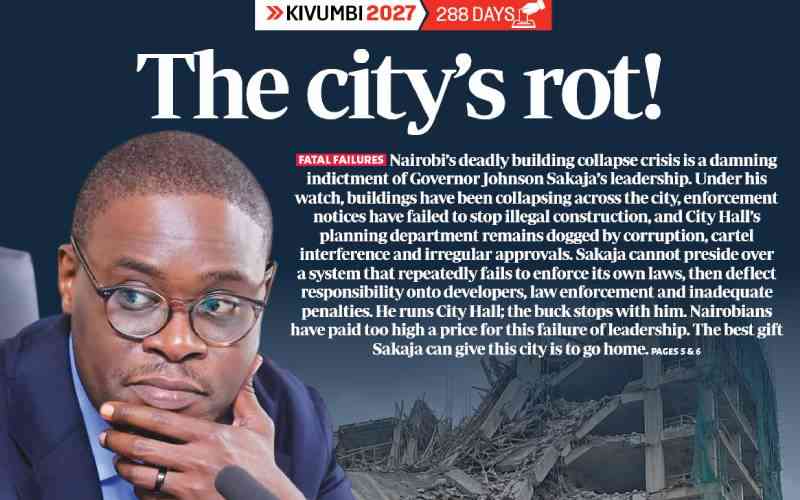
Nairobi's building collapses have killed at least 1,200 people since 2016, with enforcement failures cited as a major factor.
In Brief
- •Nairobi's building collapses have killed at least 1,200 people since 2016, with enforcement failures cited as a major factor.
- •City Hall cartels are accused of minting millions from building approvals, with brokers profiting from the system.
- •The mandatory death sentence for robbery with violence was ruled unconstitutional by a Kenyan court.
- •President William Ruto has vowed to block brokers from profiting in the Kenya Pipeline share sale.
- •A decade of stadium promises have gone unfulfilled, with little action on the ground.
Why It Matters
The deadly building collapses in Nairobi highlight systemic failures in enforcement and regulatory oversight. The City Hall cartels' alleged corruption and the unconstitutional death sentence for robbery with violence underscore broader issues of justice and accountability. These incidents have significant implications for urban safety, economic stability, and public trust in governance.
Key Details
- Deaths from building collapses
- 1,200+ since 2016
- Unconstitutional ruling
- Mandatory death sentence for robbery with violence
- President's vow
- Block brokers from profiting in Kenya Pipeline share sale
- Stadium promises
- A decade of unfulfilled promises
Context & Background
Nairobi has faced numerous building collapses in recent years, with enforcement failures and regulatory oversights cited as major contributors. The City Hall cartels have been accused of profiting from the building approval system, and the mandatory death sentence for robbery with violence was ruled unconstitutional by a Kenyan court.
Original Reporting & Sources
VNews is an independent briefing product. Original reporting remains credited to the following publishers:
This brief was synthesized automatically using attributed third-party reporting. VNews is a digital news publication produced under the VContent Group brand and operated by Francis Vincent Sunday in Ghana, independent from the publishers cited above. Read our AI Transparency Policy and Editorial & Corrections Policy.