Ghana’s NIA Enforces New Biometric Verification Rules, Warns of Fines
NIA began enforcing the 2026 National Identity Register Amendment Regulations on Nov. 2, 2026.
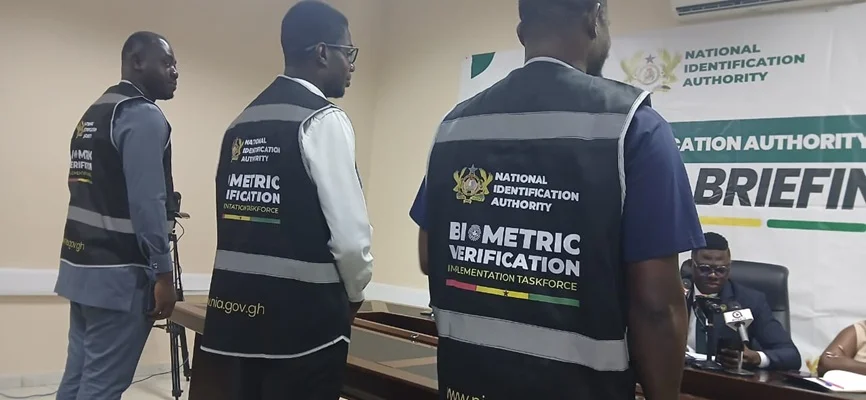
In Brief
- •NIA began enforcing the 2026 National Identity Register Amendment Regulations on Nov. 2, 2026.
- •Institutions must use NIA’s approved biometric platform and cannot rely on visual inspection or copies of the Ghana Card.
- •Non‑compliance can lead to fines of 500–2,000 penalty units and possible court action.
- •The enforcement task force will inspect institutions after a three‑month grace period expired.
Why It Matters
The new biometric rules aim to curb identity fraud and impersonation by ensuring that the person presenting a Ghana Card is its legitimate owner. By mandating a secure, chip‑based verification platform, the NIA seeks to strengthen trust in public and private sector transactions and protect citizens from identity‑based crimes.
Key Details
- Enforcement Start Date
- Nov 2, 2026
- Fine Range
- 500–2,000 penalty units
- Grace Period Expiry
- Three months after announcement
- Biometric Data Used
- Fingerprints, iris, facial features
- Task Force
- Biometric Verification Implementation Task Force
Context & Background
Ghana’s National Identification Authority has overseen the issuance of the Ghana Card since 2019, a national ID that includes biometric data. The 2026 amendment updates the regulatory framework to require biometric verification for identity checks.
Original Reporting & Sources
VNews is an independent briefing product. Original reporting remains credited to the following publishers:
This brief was synthesized automatically using attributed third-party reporting. VNews is a digital news publication produced under the VContent Group brand and operated by Francis Vincent Sunday in Ghana, independent from the publishers cited above. Read our AI Transparency Policy and Editorial & Corrections Policy.