Kordofan Becomes Sudan’s Second‑Most Attacked Region as Army and RSF Vie for Corridor
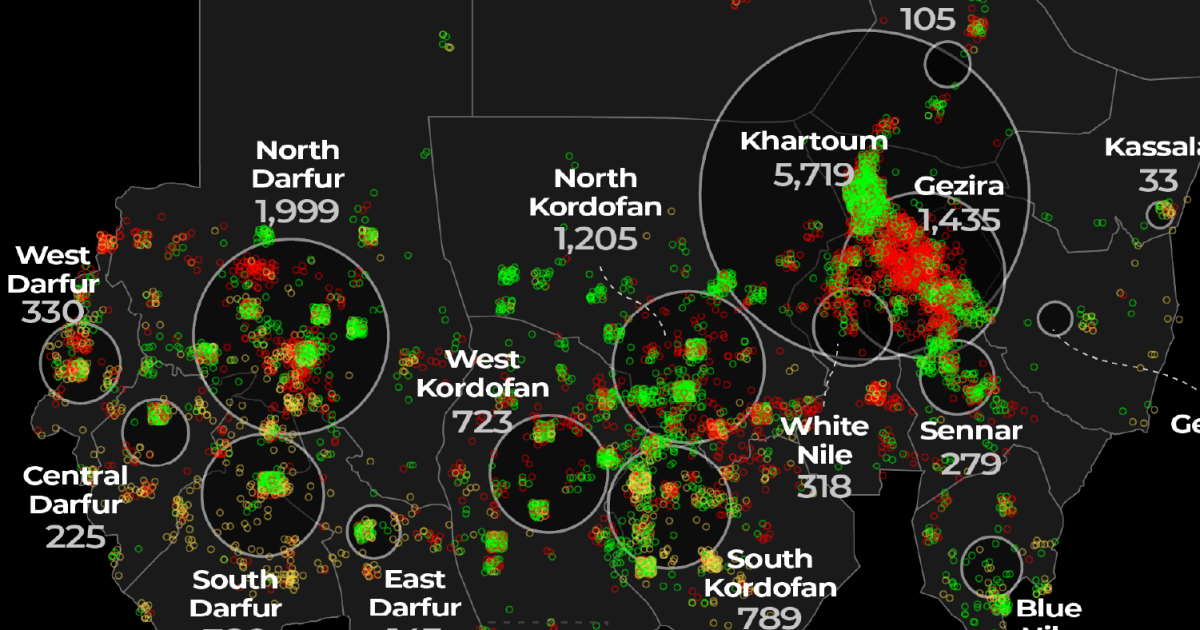
Kordofan recorded 2,876 attacks between April 2023 and September 2026, the second highest after Khartoum
In Brief
- •Kordofan recorded 2,876 attacks between April 2023 and September 2026, the second highest after Khartoum
- •The region lies between army‑held central Sudan and RSF‑controlled Darfur, making it a strategic corridor
- •Drone strikes on North Kordofan towns, including a college in el‑Obeid, have increased, targeting civilian infrastructure
- •SAF is linked to 52% of attacks, RSF 34.7%, other actors 13.3%
- •Since August 2025 the monthly attack counts of SAF and RSF have converged, while overall attacks have fallen sharply
Why It Matters
Kordofan’s position between the army’s eastern heartland and the RSF’s western stronghold makes it a pivotal battleground for control of Sudan’s internal trade routes and supply lines. The surge in drone attacks and civilian infrastructure damage threatens to exacerbate displacement and humanitarian needs in an already fragile region. The shifting balance of attacks also signals changing tactical priorities for both sides, potentially influencing future ceasefire negotiations or power‑sharing arrangements.
Key Details
- Total recorded attacks (Apr 2023‑Sep 2026)
- 14,648
- Kordofan attacks
- 2,876 (19.7%)
- SAF attack share
- 52% of total
- RSF attack share
- 34.7% of total
- North Kordofan attacks
- 1,205 (44% of Kordofan)
Context & Background
The Sudanese civil war began on 15 April 2023, pitting the Sudanese Armed Forces (SAF) against the paramilitary Rapid Support Forces (RSF). Kordofan, comprising North, South and West states, has emerged as a key battleground due to its geographic position between the army‑held centre and the RSF‑held Darfur.
Original Reporting & Sources
VNews is an independent briefing product. Original reporting remains credited to the following publishers:
This brief was synthesized automatically using attributed third-party reporting. VNews is a digital news publication produced under the VContent Group brand and operated by Francis Vincent Sunday in Ghana, independent from the publishers cited above. Read our AI Transparency Policy and Editorial & Corrections Policy.